Security | Threat Detection | Cyberattacks | DevSecOps | Compliance

7 Internet of Things Threats and Risks to Be Aware of

The internet of things (IoT) is a highly developed space that is home to a vast amount of sensitive data, making it a very attractive target for cybercriminals. Threats and risks continue to evolve as hackers come up with new ways to breach unsecured systems -- posing a threat to the ecosystem itself. Let’s take a look at the leading threats and risks to the IoT and the associated vulnerabilities that must be secured.

INFRA:HALT 14 New Security Vulnerabilities Found in NicheStack

NicheStack is a TCP/IP network stack commonly used in millions of Operational Technology (OT) devices around the world, including in critical infrastructure such as manufacturing plants, power generation/transmission/distribution, water treatment, and more. JFrog’s security research team (formerly Vdoo), together with Forescout Research Labs, recently discovered 14 new security vulnerabilities affecting the NicheStack TCP/IP stack.

Are vulnerability scan reports dangerous?

Vulnerability scan reports are requested from a wide variety of people or entities for many different reasons. Historically a report meant a static snapshot of the scan data. Some company stakeholders may want an executive overview of the current vulnerabilities present in their environment. In contrast, others may want additional data points such as trending to reflect how well they have made progress in remediating previous vulnerability scans detected.

Mapping the Attack Surface for Insurance Applications

As insurance organizations look to attract and engage customers, the growing use of web applications has increased their cyber exposure and the risks of cyberattacks. In this benchmark study, we analyzed the attack surface of the top 10 insurers in Europe to highlight the common attack vectors and security weaknesses that could be exploited – from page creation method to vulnerable components – and our top tips for reducing web application security risks.

The Simplest way to Secure your Java Maven Project

Can I scan for security vulnerabilities using Maven? How can I integrate security scanning in my Maven build? How to monitor for security vulnerabilities with every Java build? Scanning the dependencies for known security vulnerabilities in your project is essential. The ideal time to start checking your dependencies is the very moment you import them! To that end, we created the Snyk Maven plugin so you can now scan your application for security vulnerabilities in third-party libraries as part of your build cycle—putting security expertise in the hands of developers.

Announcing Social Trends: Use social media for security intelligence

We are excited to announce the availability of Social Trends, adding social media intelligence (SOCMINT) to Snyk’s vulnerability data to help development and security teams prioritize vulnerabilities more effectively. Given the size of vulnerability backlogs facing organizations today, finding and fixing security vulnerabilities in a timely manner is a monumental task. There simply are not enough hands on deck to triage and tackle all the vulnerabilities on the list.

Common web vulnerabilities every hacker and developer should know

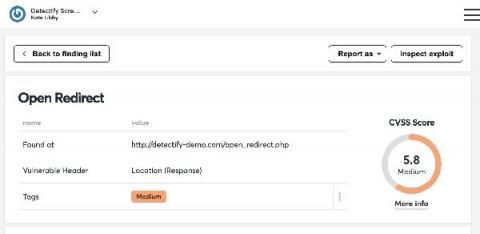
Web applications and hosted software make up the largest attack surface for modern tech organizations. The most common web vulnerabilities being exploited go beyond the OWASP Top 10 list. At Detectify, we work in close collaboration with an invite-only community called Detectify Crowdsource to get the latest vulnerability research into the hands of security defenders. Besides knowing the vulnerabilities, you need the know how on how to mitigate them.

How to mitigate CVE-2021-33909 Sequoia with Falco - Linux filesystem privilege escalation vulnerability

The CVE-2021-33909, named Sequoia, is a new privilege escalation vulnerability that affects Linux’s file system. It was disclosed in July, 2021, and it was introduced in 2014 on many Linux distros; among which we have Ubuntu (20.04, 20.10 and 21.04), Debian 11, Fedora 34 Workstation and some Red Hat products, too. This vulnerability is caused by an out-of-bounds write found in the Linux kernel’s seq_file in the Filesystem layer.

Detecting SeriousSAM CVE-2021-36934 With Splunk

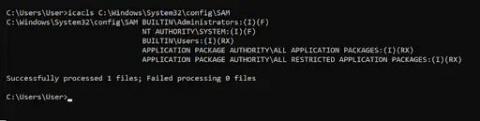
SeriousSAM or CVE-2021-36934 is a Privilege Escalation Vulnerability, which allows overly permissive Access Control Lists (ACLs) that provide low privileged users read access to privileged system files including the Security Accounts Manager (SAM) database. The SAM database stores users' encrypted passwords in a Windows system. According to the Microsoft advisory, this issue affects Windows 10 1809 and above as well as certain versions of Server 2019.

HiveNightmare / SeriousSAM (CVE-2021-36934)

First coming to light as a local elevation of privilege vulnerability affecting pre-release versions of Windows 11 (Figure 1), subsequent investigations into the issue, namely sensitive registry hive files being accessible to all users when 'System Protection' is enabled, confirm that it also affects Windows 10. Initially dubbed 'HiveNightmare' and 'SeriousSAM' by security researchers, CVE-2021-36934 has been assigned to this vulnerability although the CVSS score has yet to be determined.