

Over the past week, the WhiteSource security team has found several instances of packages that use unusual techniques to disguise malicious intent. These techniques differ from what we have usually seen in the past, such as base64 and JS obfuscation. This time, we are seeing a malicious actor use hex encoding to hide the malicious behavior of the package.
As a cybersecurity organization, Netskope has a responsibility to be transparent about security issues reported in Netskope products and services which might have an impact on Netskope customers or partners. To fulfill this responsibility, Netskope has a smooth, transparent, and industry-standard process under our Product Security Incident Response Team (PSIRT) to disclose the security issues publicly which are reported in Netskope products from various sources.
A vulnerability scan is an automated process that identifies vulnerabilities (security holes) in any software, operating system, or network that bad actors can exploit. In essence, it’s an integral component of vulnerability management focused on protecting businesses from breaches and the exposure of sensitive data.
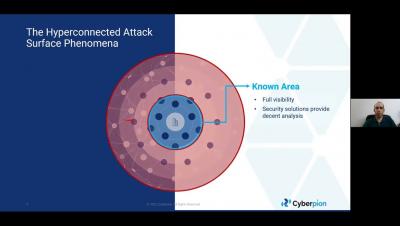
In the past, the attack surface was defined and protected by the boundaries of the organization’s physical network (aka the LAN). Using physical security methods, firewalls, and careful monitoring, organizations kept their data, endpoints, and networks secure. The entire attack surface was internal, within a well-defined and fortified perimeter.
Last week, we announced the discovery of Spring4Shell — a remote code execution (RCE) vulnerability in older versions of the spring-beans package. In our blog post Spring4Shell: The zero-day RCE in the Spring Framework explained, we showed how an old Tomcat exploit for CVE-2010-1622 became relevant again. Due to the nature of the problem, we expected that additional payloads could be created beyond this known Tomcat exploit.
Several vulnerabilities for Java Spring framework have been disclosed in the last hours and classified as similar as the vulnerability that caused the Log4Shell incident at the end of 2021. However, as of the publishing of this report, the still ongoing disclosures and events on these vulnerabilities suggest they are not as severe as their predecessor.