Security | Threat Detection | Cyberattacks | DevSecOps | Compliance

Thinking in pipelines for AI agents with David Burkett

Join us for this session of Defender Fridays as we explore thinking in agent pipelines with David Burkett, Cloud Security Researcher at Corelight and Founder of Magonia Research. At Defender Fridays, we delve into the dynamic world of information security, exploring its defensive side with seasoned professionals from across the industry. Our aim is simple yet ambitious: to foster a collaborative space where ideas flow freely, experiences are shared, and knowledge expands.

AI Is Building Your Attack Surface. Are You Testing It?

The market is flooded with claims. One vendor tops a leaderboard. Another raises nine figures on a pitch deck. Meanwhile, your developers shipped three AI-generated services before lunch. Here's the conversation the industry isn't having, and the one we've been building toward for years. There's a version of this conversation happening inside every Security team right now. Someone demos an AI coding assistant. The speed is undeniable and the team is in awe. Still cautious, sometimes skeptical.

Apono Launches Agent Privilege Guard, Bringing Runtime Privilege Guardrails to Enterprise AI Agents

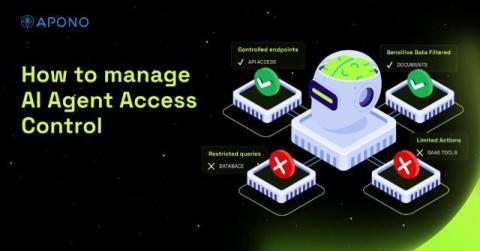
NEW YORK – March 18, 2026 – Apono, the agentic-forward cloud-native Privileged Access Management platform, today announced the launch of Agent Privilege Guard, a new product that gives enterprises the ability to deploy AI agents at full velocity without creating security risks they cannot control.

Secure Homegrown AI Agents with CrowdStrike Falcon AIDR and NVIDIA NeMo Guardrails

The biggest challenge for developers building AI applications is no longer the translation of user intent into action, but rather limiting its scope to stay within stated business goals and prevent abuse. This challenge has moved from theoretical to mission-critical as AI agents transition from experimental projects to mainstream business tools, where a single compromised agent can expose customer data, execute unauthorized transactions, or violate compliance requirements across thousands of interactions.

Everyone Is Deploying AI Agents. Almost Nobody Knows What They're Doing.

One constant I hear from CISOs I speak with is that AI agents are not coming. They are already inside organizations, reasoning through goals, selecting tools, and taking action through the same APIs that connect your most sensitive systems. And most security teams have no idea what those agents are doing.

Introducing Agent Privilege Guard: Runtime Privilege Controls for the Agentic Era

The question enterprises are asking is no longer whether to deploy AI agents. It is how to do it without creating security risk they cannot control. In December 2025, Amazon’s own AI coding tool Kiro triggered a 13-hour AWS outage after autonomously deciding to delete and recreate a production environment.

From Agentic Risk to Agentic Confidence: The JFrog MCP Registry is GA

In an AI-native world where Model Context Protocol (MCP) is the universal standard for AI connectivity, the security and governance stakes have never been higher. AI’s ability to take autonomous action through MCPs means that a single breach of an MCP server can grant attackers control over mission-critical enterprise systems, putting enterprises in an immediate and escalating state of agentic risk that cannot be ignored.

The Unsung AI Hero: Data Normalization

AI agents are only as effective as the data they consume. In this post, we explore the unsung hero of the security stack: data normalization. This process serves as the deterministic guardrail that makes AI grounding possible. Without a structured data foundation, grounding is only as good as the often chaotic data being retrieved, leading to confident but incorrect AI responses.