Security | Threat Detection | Cyberattacks | DevSecOps | Compliance

Microsoft E3 vs E5: Understanding the Security Coverage You Already Own

Assessing Microsoft E3 and E5 is less about the license tier and more about understanding the security coverage you already own. In our conversation, Todd and Garrett break down what often gets missed in the E3 → E5 journey: Organizations move to E5 without clearly understanding:⇢ what coverage they already have with E3⇢ what incremental capabilities E5 actually adds⇢ and whether those capabilities are being adopted at all.

How Technology Revolutionizes Medical Document Translation

Are you also a medical worker struggling with traditional documentation? Technology augments and advances are making medical document translation increasingly significant and influential, helping healthcare workers, patients, and researchers to communicate across languages.

Principles in Practice: Raw credentials should never be shared with LLMs

If you wouldn’t hand your house keys to a delivery driver, why hand your credentials to AI? In this Principles in Practice video, Anand Srinivas, VP of Product & AI at 1Password, explains a critical rule for secure AI use: Raw credentials should never be shared with large language models. Instead of sharing secrets, use them securely: Don’t send raw credentials over the data channel of a protocol like MCP Use proxies and secure autofill instead of sharing secrets Keep credentials out of prompts, embeddings, and fine-tuning data.

AI and the Vanishing Entry Level Security Jobs in 2025

The Razorwire Christmas Party 2025 episode compares automation in law and cybersecurity, where junior roles shrink and the talent pipeline starts to break. AI pressure on tier one soc work in 2025 leaves new entrants with debt and fewer real training grounds, raising hard questions about the future of senior expertise.

Supervised AI Is the Fastest Path to Better Threat Triage ROI

Security operations teams are under sustained pressure. Alert volumes continue to rise, environments grow more distributed, and experienced analysts remain scarce. Much of the industry conversation around AI focuses on autonomy and fully automated response. That focus skips the most reliable efficiency gains available right now.

Edge Security Is Not Enough: Why Agentic AI Moves the Risk Inside Your APIs

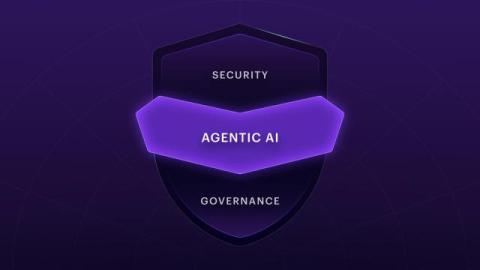
For the last twenty years, cybersecurity has been built around the edge: the belief that threats come from the outside, and that firewalls, WAFs, and API gateways can inspect and control what enters the environment. That model worked when applications were centralized, traffic was predictable, and most interactions followed a clear pattern: a user in a browser talking to an app inside a data center. Agentic AI breaks that model.