Security | Threat Detection | Cyberattacks | DevSecOps | Compliance

Managing LLM Code Security at Scale with Hybrid SAST

The amount of code being generated in the era of AI is staggering, and some non-trivial percentage of that code is insecure. According to the 2026 GenAI Code Security Report, roughly 44% of AI generated code test produced a known vulnerability. Organizations are more reliant than ever on cybersecurity programs that can scale at the velocity of AI while still managing risk with guardrails, governance, and compliance standards.
AI Vulnerability Management: Wayfinder Frontier AI Services Found It. We Fix It.

For years, security teams and developers alike have struggled with understanding and identifying all security issues affecting their deployed applications. Today, SentinelOne's Wayfinder Frontier AI Services can identify exploitable weaknesses across source code, Software Bill of Materials (SBOM) dependencies, and embedded secrets at unprecedented speed. The problem is that remediation has not accelerated at the same rate.

The EU AI Act's Missing Standards: What to Do Before They Arrive

Organizations preparing for the EU AI Act keep asking which standard to certify against, and the honest answer is that the ones that will matter are not finished. No harmonized standard has been cited in the Official Journal, and nothing available today confers presumption of conformity with the Act's requirements for high-risk systems. ‍

Multi-Agent AI Systems: When Separation of Duties Dissolves

Every enterprise control framework assumes the entity that requests an action and the entity that approves it are different. Multi-agent workflows quietly dissolve that assumption. Three agents each holding modest, individually reasonable permissions can compose an action none of them was authorized to take, and no single permission grant looks wrong in a review. ‍ That is the distinguishing property of multi-agent systems rather than a harder version of single-agent risk.

How Businesses Can Adopt AI Tools Without Compromising Security

Someone in marketing starts using an AI writing tool. A finance team member feeds spreadsheets into an AI summariser because it saves an hour every Friday. A manager wires up a chatbot to handle basic customer questions. None of it goes anywhere near IT first, and most businesses only find out after the fact, if they find out at all.

Managing AI Agent Identity at Scale: The Lifecycle Nobody Triggers

Gartner projects the average Fortune 500 organization will run more than one hundred fifty thousand agents by 2028, against fewer than fifteen in 2025. Thirteen percent of organizations believe their agent governance is adequate today. The management approach that works for fifteen agents is memory and a spreadsheet, and neither survives four orders of magnitude. ‍

Real-Time AI Security Monitoring: Why One Assessment Expires

A penetration test on a web application stays broadly valid until someone changes the application. An assessment of an AI system starts expiring immediately, because the system changes without anyone at your organization touching it. The same prompt can return a different answer tomorrow, and the provider can revise the model underneath you without notice. ‍

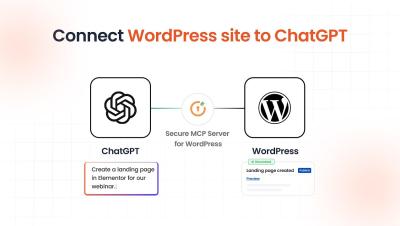
How to Connect WordPress to ChatGPT Using MCP Server | Secure MCP Server

The Secure MCP Server turns your WordPress website into an MCP (Model Context Protocol) server, allowing ChatGPT and other compatible AI clients to securely interact with WordPress. ���� �������� ����������, ������'���� ����������: • How to install the Secure MCP Server plugin on WordPress• How to configure the MCP Server• How to connect your WordPress website to ChatGPT• How to authorize ChatGPT to access WordPress• How to test the MCP connection• How ChatGPT can interact with your WordPress website through MCP• How to view and monitor audit logs of MCP activity.

Evaluating AI systems at Corelight

AI system evaluation is the process of continuously assessing AI system capabilities, limitations, and performance through quantitative and qualitative measures. Across the system lifecycle, evals provide continuous assurance: Validating system behavior before deployment and detecting drift, bias, and reliability issues in production.