Security | Threat Detection | Cyberattacks | DevSecOps | Compliance

AppSec in the age of AI: An RSA Conference preview

Application security is at a breaking point as development teams move faster than ever, aided by AI-powered coding assistants. While these tools boost productivity, they also introduce subtle errors and insecure patterns at scale. The result: a growing backlog of vulnerabilities that outpaces traditional AppSec models. This webcast examines the risks and opportunities of AI in AppSec and who will be addressing it at RSA Conference. We’ll explore how defenders can use AI to level the playing field with automated scanning, intelligent prioritization, and secure-by-design practices.

How Artificial Intelligence (AI) Can Increase Threat Detection and Response

Security leaders are being squeezed from both sides. On one side, threat actors are scaling operations with AI automation, using it to craft more convincing social engineering attacks, accelerating reconnaissance, and improving lateral movement. On the other side, defenders are drowning in telemetry, suffering under staffing constraints, and facing the harsh reality that threat actors don’t keep business hours.

AI Agent Governance: The CISO Checklist for the New AI Agent Reality

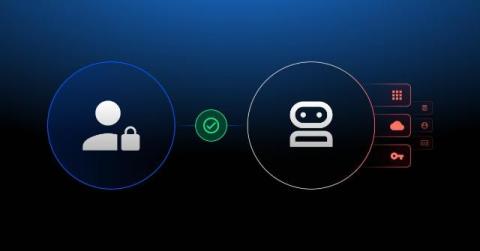
AI agents are rapidly becoming embedded in enterprise workflows, influencing revenue operations, customer engagement, development, and internal decision-making. As these systems gain autonomy and inherit access across SaaS, cloud, and endpoint environments, they introduce a new layer of operational and security risk that traditional controls cannot fully manage.

AI, Application Security, and the Illusion of Control

Over the past year, AI-generated code has moved from novelty to normal. Developers are shipping faster, prototyping faster, refactoring faster… sometimes without fully understanding what they just merged. From the outside, it looks like a productivity renaissance. From the inside, it feels like something else: a new kind of operational risk that doesn’t behave like the old kind.

How Security Teams Fight Back Against AI-Powered Hackers

Last month, the Mexican government was hacked. 150GB of government data was stolen, including 195 million taxpayer records. This attack exploited a couple of dozen vulnerabilities across ten institutions. In the past, this would have likely taken a skilled team months to crack. But of course, we’re living in a new age. This attack was executed by one person and their Claude Code assistant.

Why Legacy Security Tools Fail to Protect Cloud AI Workloads

Your CNAPP flags a misconfigured service account. Your CSPM warns about an overly permissive IAM role. Your container scanner reports vulnerabilities in a model-serving image. But none of these tools can tell you that an AI agent just called an internal admin API it has never touched before — or that a prompt injection caused your LLM to leak customer data through a RAG connector.

AI Agent Escape Detection: How to Catch Agents Breaking Their Boundaries

Your SOC gets three alerts in quick succession: an unusual outbound connection from a container, a file read on a Kubernetes service account token, and a process spawn that doesn’t match the workload’s baseline. Three different tools, three separate dashboards, three tickets.

4 Ways Businesses Use CrowdStrike Charlotte AI to Transform Security Operations

Security teams are being asked to do more than ever, often with fewer people and less time. As alert volumes continue to rise and adversaries automate their attacks, even mature SOCs struggle to keep pace. Legacy tools surface signals, but they still leave analysts responsible for triage, investigation, and response decisions that take time and experience to execute well. CrowdStrike Charlotte AI was built to change that model.

Use Agentic SOC-as-Code to Right-Size Your AI Operations

Let’s start by drawing a strong distinction between what LimaCharlie does and what others offer in their AI SOCs. LimaCharlie's Agentic SecOps Workspace is an architecture that integrates AI as part of the security fabric. It's agentic AI security you own and control, not a black box you subscribe to. We introduce an easily deployable SOC-as-code approach that increases your control and capabilities.