Security | Threat Detection | Cyberattacks | DevSecOps | Compliance


What You Missed at Aiming for Zero
In case you missed it, Netskope’s recent Aiming for Zero event was focused around how Zero Trust is more than just access controls and passwords—it’s a security concept that applies to all aspects of your network, your data, the applications you use, and the way you interact with them. If you missed the event and want to hear more about our deep dives int Zero Trust, there’s no need to worry!
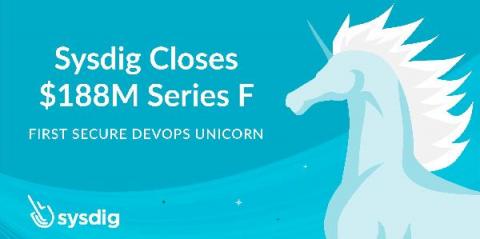
Our $188M funding round fuels our mission to help customers confidently run modern cloud applications
Today, I am excited to share that we secured $188M in a new funding round, at a valuation of $1.19B (read more here). At the outset, I want to thank our employees, partners, investors and most importantly, our customers for this important milestone. The funding follows a year of unmatched innovation that led to accelerated revenue growth, installed base growth, and rapid community adoption of our open source projects.
Cloud and Threat Report: Cloudy with a Chance of Malware
Cybercriminals are increasingly abusing popular cloud apps to deliver malware to their victims. In 2020, more than half of all the malware downloads detected and blocked by the Netskope Security Cloud platform originated from cloud apps. Cloud apps are commonly abused to deliver Trojans, with attackers attempting to exploit the trust placed in the app used for delivery. Increasingly, cloud apps are also abused for next-stage downloads, with attackers attempting to blend in with benign traffic.
Cloud Threats Memo: Beware Outsourced Cyber Attacks and Compromised Credentials
The trove of 1.3 million RDP credentials leaked recently is yet again proof that, In the underground economy, initial access brokerage is a flourishing market. Cybercriminals are outsourcing the initial access stage of the attack, so they can better focus on the execution and act more quickly.

Securing AWS Management Configurations By Combating 6 Common Threats
There’s a common misconception that cloud providers handle security, a relic leftover from hosting providers of previous decades. The truth is, cloud providers use a shared responsibility model, leaving a lot of security up to the customer. Stories of AWS compromise are widespread, with attackers often costing organizations many thousands of dollars in damages.
How Your Network Became "The Bermuda Triangle" and How You Can Fix It
“Where’s your app? Where’s your data?” For a long time, if you needed to know where your applications or data were, the answer was clear: it was always either on-premises or in a branch. Universally, almost regardless of organization size, infrastructures were contained, and visible within a defined boundary—you have a data center, a network, a branch, a user.
Creating Cloud Security Policies that Work
Now that the ongoing worldwide trend toward “going digital” has been accelerated by COVID-19, taking extra precautions to protect your organization’s data, communications and information assets is more important than ever. Of course, there are many traditional and emerging ways to protect and secure your business.