

Security | Threat Detection | Cyberattacks | DevSecOps | Compliance

Securing Public Institutions with Cloudflare One

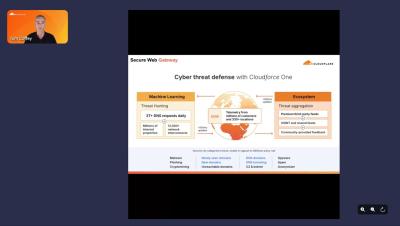
Florida’s colleges, universities, and public agencies are under pressure to manage growing cyber threats while supporting hybrid access and stretched resources. Join Tom Coffey, Senior SASE Specialist at Cloudflare, to learn how organizations like yours are adopting Zero Trust and SASE with Cloudflare One to simplify security, reduce costs, and improve performance.

Navigating Operational Resilience Regulation in Cloud Computing

The rate of adoption for cloud computing has grown steadily across many industries, driven by the need for flexibility, innovation and cost efficiency. One of the key verticals that has fully embraced cloud technology is the financial services sector. Cloud is particularly suited to this industry as it allows for more efficient storage, faster processing of large amounts of data, and consolidation of records which gives firms the ability to accurately analyse data.

Cut Your Azure Spend: Trustwave MXDR and MailMarshal Purchases Now Count Towards Your Microsoft Azure Consumption Commitment MACC

Trustwave has significantly enhanced its Microsoft Azure Marketplace offering with the addition of three security solutions that will help clients meet their Microsoft Azure Consumption Commitment (MACC). Starting immediately, Trustwave MXDR for Microsoft, MXDR Elite for Microsoft with Co-Managed SOC, and MailMarshal with Microsoft O365 are Azure Benefits Eligible in the Microsoft Azure Marketplace.

How Cybersecurity Leaders Start Being Enablers

Too many cybersecurity teams stay in the shadows, only stepping in for audits or after an incident. But if you want to influence funding decisions, share strategy, and get buy-in when it matters, you have to be in the room long before that. In the latest episode of The Connectivity Cloud Podcast, Olivier Busolini of Mashreq shares how he moved from being "the guy in the second line of defense" to a trusted partner in the business.

Introducing simple and secure egress policies by hostname in Cloudflare's SASE platform

Cloudflare’s SASE platform is on a mission to strengthen our platform-wide support for hostname- and domain-based policies. This mission is being driven by enthusiastic demands from our customers, and boosted along the way by several interesting engineering challenges. Today, we’re taking a deep dive into the first milestone of this mission, which we recently released in open beta: egress policies by hostname, domain, content category, and application. Let’s dive right in!

How to Build a Security Team That Actually Enables the Business with Olivier Busolini

In this episode of The Connectivity Cloud Podcast with Cloudflare, host Mark Dembo is joined by Olivier Busolini, Group Head of Information Security at Mashreq, to explore how cybersecurity leadership has transformed from a purely technical function to a strategic business partnership.

What is Cloud Access Security Broker (CASB)?

Cloud apps make work easier, but they also open the door to new security risks. This blog unpacks everything you need to know, like: what is CASB in cyber security, how it works, and why it matters. We break down the core pillars of CASB, share real-world use cases, and help you understand the benefits it brings to your business.

ISO 27017 Cloud Controls: List of Tasks for Providers

Most of the time on the Ignyte blog, we talk about overarching security frameworks like FedRAMP, CMMC, and ISO 27001. Sometimes, though, it’s worth digging deeper into smaller-scale elements of these frameworks. Today’s target is ISO 27017, the ISO/IEC publication focusing on cloud service security. What does this document entail, who needs to use it, and what does compliance involve? Let’s discuss.

Why Traditional DLP Fails in the Age of Cloud and Collaboration Tools

DLP emerged at a time when corporate IT environments were relatively straightforward. Employees worked primarily from corporate offices, data resided in on-premises servers, and communications happened through company-managed email systems and file shares. Traditional DLP solutions were designed to thrive in this environment.
