Security | Threat Detection | Cyberattacks | DevSecOps | Compliance

Implementing AI Security: Your Enterprise LLM Security Checklist

Security teams are approving large language model (LLM) deployments faster than they can build the controls necessary to govern them and protect vital, sensitive data. Employees paste customer records into ChatGPT, engineering teams connect internal APIs to coding assistants, and business units stand up retrieval systems against production data, often without formal review.

IT Audit: What It Is and How to Prepare for One

Cramming for an exam in school often meant late nights, large quantities of caffeine, and anxiety about potential final grades. Whether studying alone or as part of a group, you probably tried to pull together all your notes and review sheets, so you had the right information at your fingertips during the test. In some cases, these exams could determine whether you passed or failed a course.

Why Persona recommends native mobile identity verification flows

Fraudsters are adaptive actors who follow the path of least resistance. The goal of fraud-fighting teams is often to make the cost of fraud high enough that attackers go elsewhere. Leveraging Persona’s Mobile SDK raises fraudsters’ costs by requiring identity verification to happen in signal-rich mobile environments. For years, fraud fighters have layered verification checks and risk signals to detect various types of attacks.

What is KeeperDB?

KeeperDB is a secure, multi-protocol database client built on Keeper’s zero-knowledge platform. Available as both a free standalone desktop application and a privileged session component of KeeperPAM, KeeperDB combines a database query engine, vault-managed credentials, real-time performance monitoring and an AI-powered database assistant in a unified interface. Continue reading to learn more about how KeeperDB works, its key features and the benefits of using it to help secure database access.

Build Agents, Automate Workflows, and Unlock Your Content-All in One Platform

88% of organizations are running AI in at least one workflow, yet nearly two-thirds report more rework than savings. The model is rarely the bottleneck. Everyone has access to the same frontier models now. The difference is what sits underneath: content that's unstructured, ungoverned, and disconnected from the workflows that need it. Fixing the content problem usually means giving AI broad access to content, and that's where governance breaks down.

Identifying and detecting ScoutC2 malware

At Corelight Labs, our mission is to help organizations stay a step ahead of evolving threats. When our researchers came across Censys' detailed write-up on ScoutC2, a rapidly growing open-source command-and-control (C2) framework favored by threat actors, we knew we needed to bolster community defenses quickly.

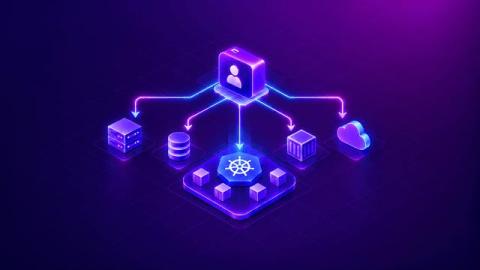
Kubernetes for Agentic AI: Best Practices for Identity and Access

In Part 1 of this series, we addressed 18 Kubernetes best practices spanning across container hardening, observability, availability, and fault tolerance. Those practices secure the containers that agents run in. But the CNCF AI Technical Community Group's cloud-native agentic standards go further, establishing that securing containers is only the beginning.

What Is SOAR? a Practical Guide for Modern SOCs

Your SOC probably already has good tools. A SIEM collects logs. An EDR agent watches endpoints. Threat intel feeds add context. Ticketing systems track work. Yet the team still feels slow, overloaded, and inconsistent. That gap is where most leaders start asking what is SOAR. Not because they want another acronym, but because they need a way to make the tools they already own work together, reduce manual effort, and respond with less chaos.