

Security | Threat Detection | Cyberattacks | DevSecOps | Compliance

The Path to Autonomous Networking Starts Here

Networks have never been more critical, more complex, or more difficult to run with confidence. The infrastructure powering global finance, healthcare, and commerce has outgrown the tools built to manage it, and the teams responsible for keeping it running deserve better than guesswork. Forward is on a mission to change that.
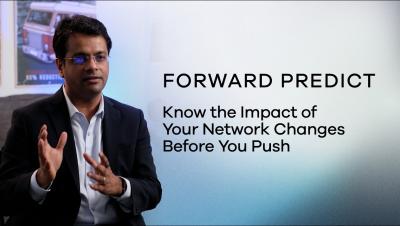
Forward Predict: Know the Impact of Your Network Changes Before You Push

What if your team could know exactly what a network change would do before it touched production, not a best guess, not built on incomplete data, but a mathematically verified outcome drawn from an accurate model of your actual network? That is what Forward Predict delivers.

What Is MCP Security? 9 Things Every CISO Needs to Know

Your AI agents had a productive day. Nobody can tell you what data they touched. A developer opens Cursor and connects it to a GitHub MCP server and a Postgres MCP server. The agent reads the repo to understand a schema change, finds an AWS access key in a config file, and uses it to run a migration against staging. The key now lives in the agent's context, in the Postgres query log, in the chat history, and in whatever artifact the developer copies out. No alert fired. No policy triggered.

What 500+ Industry Experts Told Us About Securing Autonomous AI: A Policy Roadmap

When the US Center for AI Standards and Innovation (CAISI) asked for public input on securing agentic AI systems, the response was massive: over 500 detailed submissions from Fortune 500 companies, defense contractors, AI startups, and cybersecurity firms. The result is substantial insight into how industry views the regulatory challenges of autonomous AI agents and what they think policymakers should do about it.

AI-Driven Cyber Warfare Reshapes Global Defense Readiness

This article was originally published in TechRadar Pro. The Iran conflict is serving as an AI testbed for the next era of cyber conflict. Most organizations are watching the tactics and impact unfold with cybersecurity defenses that are simply not prepared for this level of sophistication. Meanwhile, technology leaders are seeing AI as both their biggest opportunity and a major new attack vector.

Why Legacy DLP Fails Against Agentic AI

Security teams that deployed legacy DLP years ago built something real. The rules fire. The alerts go out. Compliance boxes get checked. The problem is not that those programs stopped working. It is that the threat moved, and the architecture did not. Agentic AI has introduced a class of data movement that legacy DLP was never designed to govern: autonomous, continuous, multi-step, and operating at machine speed across systems that static rules cannot enumerate in advance.

Agents need boundaries with Fotis Chantzis from OpenAI, Zero-Shot Learning

Agents need boundaries | Fotis Chantzis from OpenAI Agents don't fit old identity models. As OpenAI’s Agent Security Lead, Fotis Chantzis has a front-row seat to see how agents push identity systems beyond what they were built to control. That’s where things start to fall apart and where most teams lose control.

Grid by LimaCharlie is now in beta: Agentic SecOps for the stack you have

Grid is LimaCharlie's agentic AI layer for security teams that want AI operations running across their existing stack right now. Security providers and SOCs need access to AI capabilities without waiting for a migration window, a contract renewal, or a vendor to ship the features they need. Every major security vendor is offering some version of AI. CrowdStrike has Charlotte AI. SentinelOne has Purple AI. Microsoft has Copilot for Security.

Using Generative AI for Incident Response Automation: A Complete Guide to AI Agent Development

Security Operations Centers run on caffeine and context-switching. Any given shift means hundreds of alerts, tools that don't talk to each other, and analysts who know that somewhere in that noise is a real threat - they just need time to find it. That's the core tension AI agent development is built to resolve. This guide covers the full lifecycle: from scoping your first use case to maintaining a production-grade agentic SOC.