Security | Threat Detection | Cyberattacks | DevSecOps | Compliance

What Is CSPM? Cloud Security Posture Management

The shift to cloud-native infra has broken the traditional perimeter security model. Modern cloud environments are dynamic, heavily distributed, and identity-driven, creating security challenges that conventional security tools were never built to address. Traditional SIEM and vulnerability management tools lack native capabilities to detect issues in IAM policies, S3 bucket ACLs, or the blast radius of a misconfigured Kubernetes node pool.

Serving the most critical missions: Cloudflare for Government achieves FedRAMP Class D (High) Certified status

We believe the Internet must be a force for good, and that it requires a foundation of trust. Nowhere is that trust more critical than in public service. Government agencies are the stewards of a nation’s most sensitive data. They protect national security, critical infrastructure, and the personal information of every citizen. Cloudflare’s mission is to help build a better Internet.

Unveiling good and bad behaviors on the Agentic Internet

The Internet isn’t a single lane of traffic. For a long time, the rule of thumb in web security was that bots are bad, while humans are good. Of course, we’re far past this generalization. Humans can be fraudulent, and bots can be helpful at different levels. Site owners actively want some automated traffic to interact with our sites to make the Internet functional and discoverable. To complicate things further, the line between "human" and "bot" is blurring more and more.

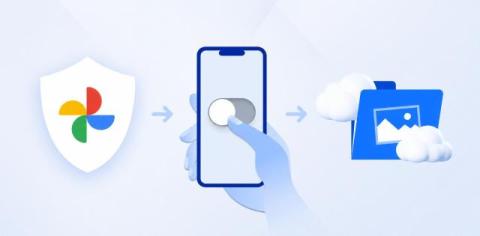
How to Stop Google Photos Backup and Protect Your Cloud Storage

For Android users, all the photos you take are automatically backed up into Google Photos; the same goes if you have Google Photos on iOS or your desktop devices. But what if you don’t want to automatically back up your Google Photos? Or what if you no longer want to be a part of Google’s business model that profits from your data?

Cloudflare AI Search: give your agents a search engine for your data

Today, we’re excited to announce a few developer experience improvements to Cloudflare AI Search to make it easy to manage a search solution out of the box. Previously, you had to stitch together components of the Cloudflare primitives (Workers AI, AI Gateway, Vectorize, R2, Browser Run) but now, AI Search can do this automatically, and better. Our goal is to give your agents their own search engine, where they can easily find data to provide better answers for themselves and their humans.

JumpCloud - Secure Every Identity. Human or not.

AI is advancing. Governance is lagging behind. AI agents are now managing critical tasks across your workforce. And they need access to your enterprise IT systems to do it. JumpCloud manages the entire lifecycle for human, non-human, and agentic identities from a single platform. Every identity, verified. Every action, governed.

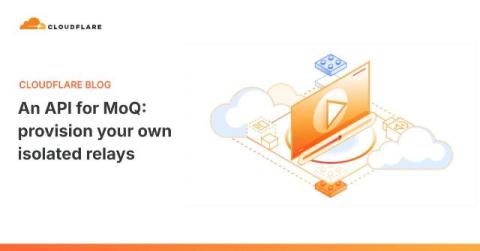
An API for MoQ: provision your own isolated relays

Last year, we enabled Media over QUIC (MoQ) on every Cloudflare server and opened the network for anyone to test. It provided a global MoQ endpoint, but not the isolation and access controls needed to run an application. Today, we’re adding those isolation and access controls. The new MoQ provisioning API lets you create an isolated relay for your application and issue separate credentials for publishers and subscribers.

Why is MFA Needed for Your Atlassian Cloud Instance?

In 2026, cyberattacks are constant and highly coordinated. Every day, there are 300 million fraudulent sign-in attempts targeting cloud services. That number reflects the scale of automated attacks happening right now across the cloud. If your organization uses Atlassian Cloud apps like Jira, Confluence, or Jira Service Management, you rely on the cloud. Your critical data, like customer info, source code, sprint data, or documentation, is stored there.

Protecting data in the cloud: Risks, responsibilities, and best practices

Cloud storage feels like an ocean—vast, endless, and deeper than Everest is tall. While it feels like there is limitless space for your data, the reality is not so harmonious. It's truly a case of survival of the fittest. With the right policies and data protection practices in place, your data remains safe. If not, it could either be lost in the abyss as dark data or end up as the next meal of a great white.