Security | Threat Detection | Cyberattacks | DevSecOps | Compliance

Defragging database security in a fragmented cloud world

Security can often be distilled down to protecting data. And with microservice-driven applications, the approach to cloud database security has evolved quite dramatically. Beyond just securing data in the cloud, it’s now also difficult to know where the data resides, where the data is flowing, and how this data should be classified.
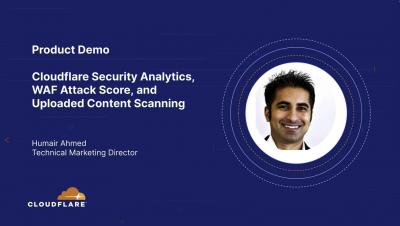
Cloudflare Security Analytics, WAF Attack Score, and Uploaded Content Scanning

Cloudflare Security Analytics, WAF Attack Score, and Uploaded Content Scanning further enhance Cloudflare security and WAF capabilities. Security Analytics brings together all Cloudflare security detection capabilities in one place to show a detailed understanding of a site's traffic and threats. WAF Attack Score via machine learning scores every request with a probability of it being malicious. Uploaded Content Scanning scans content being uploaded to your application for malicious content.

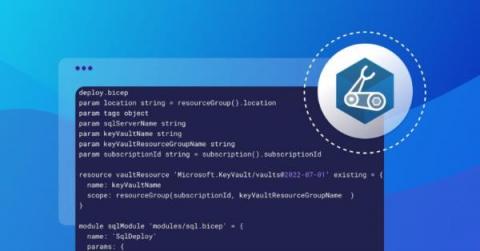
Azure Bicep security fundamentals

Azure Bicep is getting more popular by the day and is rapidly becoming the replacement for Azure Resource Manager (ARM) templates. In this post, I am going to go over some security fundamentals when using Bicep. If you are not familiar with Bicep then I recommend taking a look at the Microsoft Learn documentation to find out more.

How Netskope Cloud Exchange as a Managed Service Can Help Improve Your Security Posture

Starting January 1, 2023, Netskope will offer customers Cloud Exchange (CE), its industry leading integration platform, as a managed service. This managed service will enable a much larger customer base to benefit from CE, including customers lacking in-house resources or preferring to consume CE as a managed service.

SANS 2022 Multicloud Survey Exploring the World of Multicloud

SANS research has shown that more organizations are using multiple cloud providers. Multicloud adoption can be driven by a variety of factors, such as competitive differentiation, mergers and acquisitions, and more. This event explores various results from the SANS 2022 Multicloud Survey, including multicloud adoption trends, how adoption decisions are made, and—most importantly—what cybersecurity teams are doing to cope with the onslaught of challenges brought about by so much change, complexity, and variation in the cloud services marketplace.

Breaking Down the Complexity with Cloud Through BAS

As FSIs adopt new technologies to increase business efficiencies and drive new business, they are now operating with new applications, devices, and infrastructure. This not only increases their attack surface, but also the level of risk to their company and customers. But, traditional scanning and testing technologies struggle in a multi-cloud world. In this session, SafeBreach CISO Avishai Avivi will discuss how you can cut through the noise and simplify the testing of cloud controls.

AWS re:Invent 2022: How Neiman Marcus transitioned to developer-first security

At this year’s AWS re:Invent conference, Snyk’s VP of Product Marketing, Ravi Maira, spoke with Omar Peerzada, Cyber Security Architect at Neiman Marcus, about how his team transitioned from older security practices to a developer-first security strategy. Watch the full talk now, or keep reading for the highlights.

5 Ways to Reduce your Cloud Attack Surface

The emergence of cloud computing transformed the nature of IT ecosystems and infrastructure in many beneficial ways. From cost savings to flexibility to unparalleled scalability, the cloud’s advantages are well-documented. But it’s important not to overlook the fact that migrating to the cloud introduces many new points where unauthorized hackers can try to enter and launch a cyber-attack.
Featured Post

How the cloud makes cybersecurity stronger

Cloud computing has transformed the software industry in recent years. From productivity applications to communications, business intelligence, and CRM systems, cloud-based systems have come to dominate the market. Indeed, Gartner predicts that by 2025, almost two-thirds of enterprise spending on application software will be directed at cloud-based technology.

Integration Exploration: Getting Started with Falcon LogScale and Bucket Storage on AWS S3

If you run CrowdStrike Falcon® LogScale, previously known as Humio, locally or on-premises, one of your first steps is to configure local storage so that LogScale has a persistent data store where it can send logs. If you’re running LogScale as a cluster setup, then you’ll have some data replication as a function of how LogScale manages the data. However, even with that replication, you’ll probably still want something outside of your local infrastructure for resiliency.