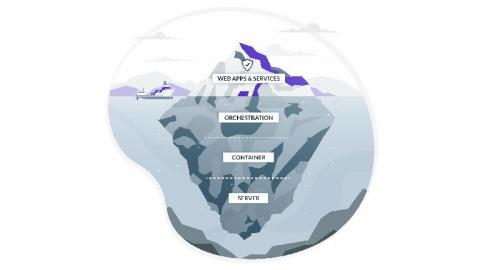
The maturation of software development has been driven by the increasing segmentation of functions into their own portable environments. Infrastructure is splintered into dozens of computing resources, physical servers, containers, databases, Kubernetes pods, dashboards, etc. Such compartmentalization has made it incredibly simple for developers to enter their desired environments with minimal disruption to other working parts.
We at Netskope Threat Labs have published a series of blogs detailing the misconfigurations in cloud apps causing data exposure. Misconfiguration and sensitive data exposure have been listed as predominant top 10 OWASP security risks for years, and are now also the predominant cause of cloud data breaches.
There is no shortage of IT cloud software services out there for businesses to choose from. Regardless of their business needs you can be sure there will be a myriad of solutions. Instead of a few grand does-it-all services, IT has become a swarm of inter-playing, inter-operating, and interconnecting services. It’s no surprise that services like zapier and IFTTT are thriving in this ecosystem where they can become the glue and automate the gap between them. The future is surely bright.
Earlier this year, the news broke of a new method that attackers were using to infiltrate Google Drive.
Kubernetes clusters have become the go-to solution for hosting applications in the cloud. Most cloud providers offer Kubernetes services, such as the Azure Kubernetes Service (AKS), Amazon Elastic Kubernetes Service (Amazon EKS), or Google Kubernetes Engine (GKE). But are you spending too much on compute resources in the cloud? Is your load pattern complex and difficult to predict? Is the load growing inconsistently or are you running applications on-demand that could cause sudden bursts?
Enabling enclaves-based security is key for enterprise cloud adoption General availability of Nitro Enclaves, recently announced by AWS, is Amazon’s way of delivering confidential computing to its customers. Following similar announcements by Microsoft Azure and Google Cloud, AWS announcement further confirms growing demand for additional runtime protection of customer’s data and other intellectual properties.