Security | Threat Detection | Cyberattacks | DevSecOps | Compliance

HIPAA Compliance for Healthcare SaaS in Singapore

Rate this post Last Updated on May 11, 2026 by Narendra Sahoo Contents hide HIPAA Doesn’t Stop at the US Border Compliance by Design: Why Architecture Trumps Policy The Three Security Rule Safeguard Categories Engineering HIPAA Technical Controls Multi-Tenancy, Breach Notification, and Cross-Border Governance Cloud Security Operations: Keeping HIPAA Controls Alive The AI-Cloud Blueprint: HIPAA-Compliant AI in 2026 Frequently Asked Questions Conclusion: Build Compliance Into the Code.

Surface Tension in AI: Early Adopters Pivoting for Compliance

A good way to measure the success and challenges of new technologies is to spend an evening networking with your peers. Sure, a lot of what you take in is anecdotal, but what you are looking for is consistency in the stories being shared and the industries where the stories are occurring. Recently, I had the opportunity to network with a number of my peers. I had one question that I asked consistently: “How are your AI deployments going?”

Multi-Site Data Center Audit and Compliance Best Practices

Most multi-site infrastructure teams manage access and audit logging site by site, using stacks that have been built up over time through different tools, different owners, and thousands of static credentials or standing admin privileges. This makes org-wide auditability nearly impossible to produce on demand, and adds complexity to regional compliance requirements.

Canada's Emerging AI Regulations Are Sending a Clear Signal: Mobile AI Governance Can No Longer Be Ignored

As organizations accelerate AI adoption, governments worldwide are rapidly establishing governance frameworks to address the operational, security, and societal risks posed by AI systems. Recent attention has focused on the European Union’s AI Act, the first comprehensive AI regulatory framework that imposes risk-based obligations on organizations deploying and managing AI technologies. While Canada has not yet enacted comparable legislation, the direction is becoming increasingly clear.

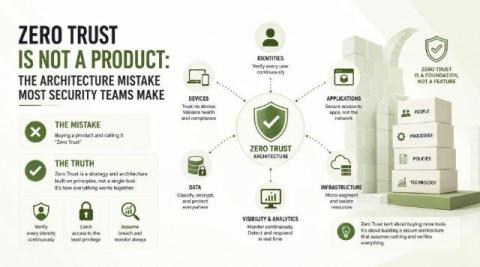
Zero trust is not a product: The architecture mistake most security teams make

Zero trust is not something you buy off a shelf. It is an architectural and cultural shift in how your organization thinks about access, risk, and trust across every layer of your environment. Most zero trust approaches are anchored on three core principles: verify explicitly, use least privilege access, and assume a breach. Verifying explicitly means using strong, context-aware authentication (like MFA, device posture checks, and risk signals) for every connection.

Vanta SVP of Engineering on Modern CTO Podcast: "How hard can it be?"

"How hard can it be to just ship an AI feature?" Our SVP of Engineering, Iccha Sethi, asked her team this. Just once. Turns out building in the age of AI is a fundamentally different problem, from managing model drift to rethinking what "done" even means. Iccha joined @ModernCTO to get into all of it.

PCI DSS vs SOC 2: Which Do You Need?

With so many different security frameworks and standards that apply to different industries and businesses, it can be difficult to even know where to begin. Which ones do you need to use, at what levels, and when? Two frameworks in particular are closely related and important for many businesses, and thus are the cause of a lot of confusion. We wanted to address that confusion today. Those two are PCI DSS and SOC 2.

The 7 Compliance Failures That Sink Healthcare and Telehealth Apps Before Launch

Most healthcare apps don't fail because the code is bad. They fail because compliance was treated as a final checklist instead of a foundational design constraint. By the time the issue surfaces, the architecture is already locked, the budget is already spent, and the launch date is already public.

Key PCI DSS Controls You Must Build For 2026

PCI DSS controls are no longer just a compliance checkbox — they’re a mandatory security baseline that stands between your customers’ card data and sophisticated cybercriminals who are faster, smarter, and better-funded than ever before. According to the Nilson Report, global card fraud losses exceeded $33 billion in 2022 and are projected to surpass $38 billion by 2027.

Agentic AI in security operations: Friend, risk, or both

Agentic AI is forcing a hard question on every security leader: when your SOC is full of autonomous “doers” instead of just dashboards and scripts, is that your new best friend or a brand‑new risk surface you barely understand? The honest answer is both, and the way you design, govern, and deploy these systems will decide which side wins.