Financial Services Software Has Fewer Security Flaws Than Most Industries
Despite Low Flaw Prevalence, Finance Industry Lags in Fix Rate 30 Percent of Open-source Flaws Remain Unresolved After Two Years.


Open source libraries and frameworks are a great way to jump-start development projects. Open source empowers developers to do some great things without reinventing the wheel and developing solutions for problems that have already been solved. However, adding any code to a project carries an inherent risk of introducing potential vulnerabilities that may have made their way into it through error or malice.
Today, open source software provides the foundation for the vast majority of applications across all industries, and software development has slowly moved toward software assembling. Because of this change in the way we deliver the software, new attack surfaces have evolved and software security is facing new challenges inherent with dependency on open source software.
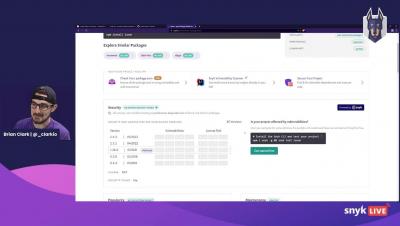
Snyk recently partnered with the Linux Foundation to produce a report focusing on the state of security in the open source software (OSS) space. The report was based on 550+ survey responses and 15 interviews with OSS maintenance and cybersecurity experts. Following the report’s publication, experts from Snyk held a webinar with the Linux Foundation to discuss some of the key insights.
Open source software is a key component in modern applications. It has created a new era in software development, promoting a free exchange of ideas within the developer community and enabling developers to build more functional software, faster than ever. Based on most estimates, 70-90% of any piece of modern software includes open source code.
A few months ago, we released our 12th annual State of Software Security (SOSS) Report. In our announcement blog, we noted new application development trends (like increased use of microservices and open-source libraries), the positive impact that Veracode Security Labs has on time to remediate security flaws, and the increased use of multiple application security scan types. But what we have yet to dive into is the security flaws we found in different programming languages.