Security | Threat Detection | Cyberattacks | DevSecOps | Compliance

Continuous REST API Testing With CI Fuzz

CI Fuzz is a platform for automated security testing that aims to enable developers to ship secure software fast. The platform empowers development teams to automatically deploy continuous REST API security tests with each pull request. Since it enables the instrumentation of entire web service environments, CI Fuzz can create test inputs that are guided by code coverage. This enables it to uncover complex vulnerabilities and edge cases that other tools often overlook.


Why authorization and authentication are important to API security - and why they're not enough

The number of machine identities for which organizations are responsible has “exploded” in recent years, according to Security Boulevard. These machine identities include devices and workloads. But they also include application programming interfaces (APIs). Organizations use APIs to connect the data and functionality of their applications to those managed by third-party developers, business partners, and other entities, per IBM.

Phishing operators abuse bank APIs to improve phishing TTPs

True Login phishing kits are continuously being developed by threat actors to improve their TTPs in luring victims. By using true login kits, the phishing operators have a higher chance of making potential victims believe they are logging into the real website. True login kit developers are abusing publicly available APIs of the banking company to be able to query login information to be shown to potential victims, in turn luring the victim even further into the operations.

Create an API Specification Scan

Traditionally Veracode Dynamic Analysis has targeted applications with a Web user interface. But increasingly, web applications are composed of many small microservices, many of which have Representational State Transfer (REST) interfaces with which the UI layer communicates. With API scanning, you can now scan the APIs of your microservices earlier in the software development process, before they are integrated into a web application.

How and why we built Masked Email with JMAP - an open API standard

Our core values as a company center around our users’ privacy, security, and satisfaction. While developing Masked Email – our integration with Fastmail that lets users create new, unique email addresses without ever leaving the sign-up page – we needed a technology that brought all three values together.

gRPC-web: Using gRPC in Your Front-End Application

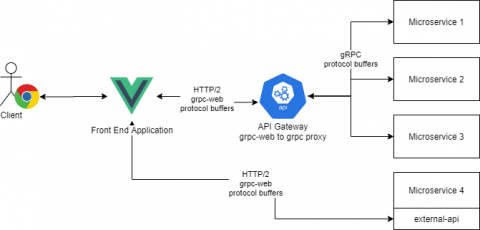
At Torq, we use gRPC as our one and only synchronous communication protocol. Microservices communicate with each other using gRPC, our external API is exposed via gRPC and our frontend application (written using VueJS) uses the gRPC protocol to communicate with our backend services. One of the main strengths of gRPC is the community and the language support. Given some proto files, you can generate a server and a client for most programming languages.

Are APIs the Gateway for Credential Stuffing Attacks?

FinTechs have emerged as the digital-first answer to transforming the banking industry. Legislation such as the EU’s PSD2 and the UK’s Open Banking have cemented their place in the financial services environment, while removing much of the red tape that surrounds financial services to encourage collaboration and ensure security by design. Much of this collaboration is facilitated by open APIs, but what do we know about the API layer and security vulnerabilities that threaten your FinTech when it is exposed?

Hacker School Reboot - insights from leading API hackers [VIDEO]

Detectify is on a mission to drive the future of Internet security with automated and crowdsourced web solutions. API security and hacking is a pretty hot topic today and we invite 3 experts to join us for the latest Detectify Hacker School Reboot to present lightning talks on their experience and interests in hacking APIs. Detectify recently announced that we are researching, breaking and securing APIs.

Web scanners are evolving to secure modern web applications and their APIs

Tom Hudson (TH), Senior Security Researcher at Detectify, joined the Application Security Weekly podcast to talk about the status quo on web scanners and securing modern web applications. We’ve edited the transcript for brevity and taken some highlights from the pod episode below.