Security | Threat Detection | Cyberattacks | DevSecOps | Compliance

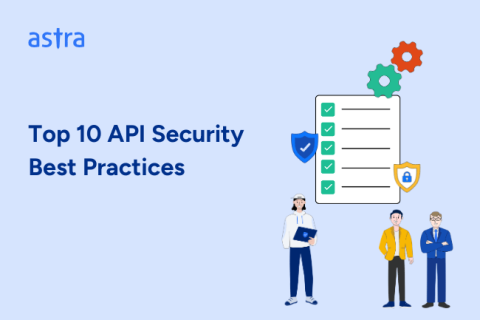
Top 10 API Security Best Practices

Every day, organizations expose their APIs, unknowingly allowing cybercriminals to try and exploit them. A single vulnerability can lead to massive data breaches or help gain unauthorized access. Worst Part? Most organizations realize the weakness when it’s already too late. Without strong security measures, your API is a prime target for attackers trying to exploit unpatched vulnerabilities or misconfigurations in the environments.
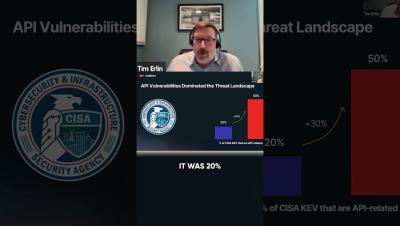
Collaborate & Protect: The Future of API Security Strategy #CyberThreats #CISAReport #APISecurity

The API attack surface is rapidly expanding, with 50% of known exploited vulnerabilities now API-related (CISA). Security leaders must prioritize API security, implement real-time monitoring, and foster cross-team collaboration to stay ahead of threats. Strengthen your defenses now!

APIs: The New Target for AI-Powered Attacks

With the rapid evolution of artificial intelligence (AI), attackers are now leveraging machine learning (ML) to mount sophisticated attacks on Application Programming Interfaces (APIs). These AI-powered threats, including adaptive bots, automated vulnerability scanning, and synthetic identity generation, represent a new wave of risks that traditional defenses are unable to address effectively.

Data Leaks and AI Agents: Why Your APIs Could Be Exposing Sensitive Information

Most organizations are using AI in some way today, whether they know it or not. Some are merely beginning to experiment with it, using tools like chatbots. Others, however, have integrated agentic AI directly into their business procedures and APIs. While both types of organizations are undoubtedly realizing remarkable productivity and efficiency benefits, they may not know they are putting themselves at a significant security risk.

APIs: The Silent Highway for Sensitive Data

Think about how your banking app connects to payment processors or how your healthcare provider’s system shares records securely – APIs have become essential for modern digital interactions, enabling applications to communicate and share data effortlessly. However, this convenience comes at a cost: APIs often handle vast amounts of Personally Identifiable Information (PII), making them prime targets for API data exfiltration.

API Honeypot Results: How Fast Do Hackers Strike? #CyberThreats #InstantDefense #HackerSpeed

New APIs are attacked in just 29 seconds, according to Wallarm’s API honeypot test. Batch requests can extract 10M records in under 10 seconds, making real-time protection essential. Learn how to secure APIs before attackers strike.

One PUT Request to Own Tomcat: CVE-2025-24813 RCE is in the Wild

A devastating new remote code execution (RCE) vulnerability, CVE-2025-24813, is now actively exploited in the wild. Attackers need just one PUT API request to take over vulnerable Apache Tomcat servers. The exploit, originally published by a Chinese forum user iSee857, is already available online: CVE-2025-24813 PoC by iSee857.

Beyond Checkboxes: The Essential Need for Robust API Compliance

APIs serve as essential links in today’s digital infrastructure, enabling data sharing and application integration. However, their widespread use has made them prime targets for attackers. Hence, strict compliance with security regulations is not just optional; it is imperative for business success. The increasing frequency of data breaches and the sophistication of cyber threats highlight the pressing need for strong API security.