Security | Threat Detection | Cyberattacks | DevSecOps | Compliance

How to Set Up a Headless CMS with a Custom Frontend Framework

In an increasinglydigital world, the demand for flexible, scalable and agile web experiences has never been higher. The company can use a headless CMS with their own frontend framework and use it to customize the web page to the maximum limit they want for the bestperformance and still owning the UI components which are more suitable and they are aiming to achieve.
Wallarm Research Releases Nuclei Template to Counter Threats Targeting LLM Apps

Wallarm Research has just released a powerful new Nuclei template targeting a new kind of exposure: the Model Context Protocol (MCP). This isn’t about legacy devtools or generic JSON-RPC pinging. It’s about the protocol fueling next-gen LLM applications — and it’s already showing up exposed in the wild.

AppSentinels: Fortifying Your Defenses with Business Logic Security

In today’s dynamic digital landscape, applications are the backbone of modern businesses. They drive operations, facilitate customer interactions, and manage critical data. However, the intricate web of rules and processes that govern these applications – the business logic – often presents a significant, yet frequently overlooked, attack surface.

Setting Up Astra's API Security with NGINX Ingress in Kubernetes

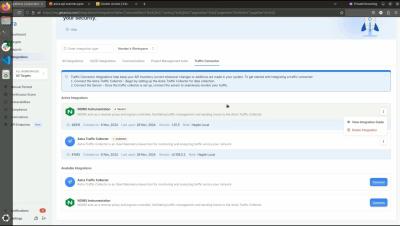
In this video, we’ll show you how to integrate Astra’s API Security Platform with your Kubernetes cluster using an NGINX Ingress controller. This setup allows Astra to passively observe live API traffic flowing through your ingress, enabling continuous vulnerability detection without interrupting your application. We'll cover.

How to Set Up Astra's API Traffic Collector in Kubernetes

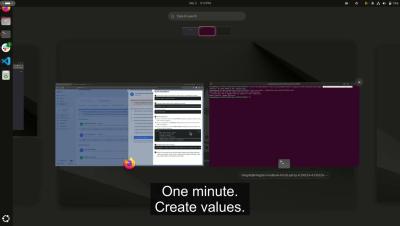
In this step-by-step tutorial, we’ll walk you through setting up Astra’s API Traffic Collector inside a Kubernetes environment. This integration enables you to mirror live traffic to Astra's security engine—without impacting performance—so you can uncover vulnerabilities in real-time, without needing to configure test environments or rerun tests manually. You'll learn how to.

Meeting NIST API Security Guidelines with Wallarm

On March 25, 2025, NIST released the initial public draft of NIST SP 800-228, "Guidelines for API Protection for Cloud-Native Systems." The document provides a comprehensive framework for securing APIs in cloud-enabled environments. However, for organizations looking to align with these objectives, the tooling requirements may seem initially overwhelming. Fortunately, Wallarm helps streamline the process by integrating many of these recommendations into a single, cloud-native solution.

Why WAFs and API Gateways Can't Stop API Attacks #APIsecurity #Cybersecurity #APIGateway

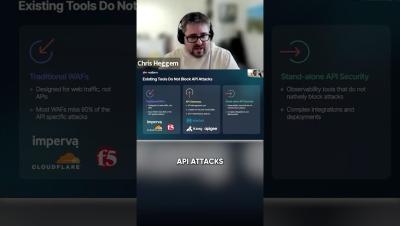
You may have a WAF or an API Gateway in place — but your APIs are still vulnerable. Traditional tools weren’t built to detect or block API-specific threats in real time. Wallarm explains why modern API protection requires more than legacy security tools.

A Buyer's Journey for API Security

Join us for a webinar that explores the challenges of securing APIs, which are increasingly critical to modern organizations. We will discuss the key issues facing API driven companies today, including hidden APIs and sophisticated attacks that can disrupt operations. We'll examine real-world examples of API vulnerabilities and the solutions to address them. We'll cover the essential criteria for selecting an API security product that fits your organization's needs.

How to Cut PCI DSS Scope and Eliminate Compliance Costs

Securing PCI and PII data is at the core of what we do at Protegrity. You can try out Protegrity’s capabilities today, through our API Playground. This section walks you through some sample scenarios of de-identifying PCI data, so that it is removed from your environment and only reversed once it leaves it. To run this example, you have to be signed up to the Protegrity API Playground.

The API Security Challenge in AI: Preventing Resource Exhaustion and Unauthorized Access

Agentic AI is transforming business. Organizations are increasingly integrating AI agents into core business systems and processes, using them as intermediaries between users and these internal systems. As a result, these organizations are improving efficiency, automating routine tasks, and driving innovation. But these benefits come at a cost. AI agents rely on APIs to access data and functionality from underlying systems. Without APIs, AI agents are useless.