Security | Threat Detection | Cyberattacks | DevSecOps | Compliance

What is ISMS-P and how it aligns with ISO 27001 and ISO 27701

Accelerating security solutions for small businesses‍ Tagore offers strategic services to small businesses. A partnership that can scale‍ Tagore prioritized finding a managed compliance partner with an established product, dedicated support team, and rapid release rate. Standing out from competitors‍ Tagore's partnership with Vanta enhances its strategic focus and deepens client value, creating differentiation in a competitive market.
What PCI DSS 4.0 Requires for Infrastructure Identity and Access Evidence

Most conversations about PCI DSS 4.0 start with the requirements, but I’d rather start with a habit. As a GRC & Cybersecurity Consultant advising organizations preparing for PCI DSS 4.0 assessments, I’ve developed a habit of observing how findings move from identification to ownership, remediation, and documented closure. That’s often where accountability gaps and unresolved findings surface first.

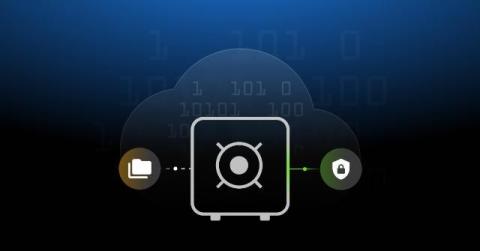
How To Eliminate Secrets Configuration Drift Between Your Vault and the Cloud

You might treat a centralized vault as the authoritative source for every secret, but secrets can quietly fall out of sync as they get copied into cloud secret stores, CI/CD pipelines and running workloads. This is referred to as secrets configuration drift, and it can leave outdated or standing credentials, API keys and other secrets active for longer than intended.

Recognizing and detecting data exfiltration

Every breach that lands a CISO in front of the board has a common final act: Data leaving the building. Attackers don't get paid for breaking in. They get paid for what they take out. And by the time stolen data appears on an extortion site or in a regulator's inbox, the window to stop the damage has already closed. That is what makes exfiltration so dangerous. It rarely looks like an emergency.

OT: The Other Technology Evolution

Written by Bill Moore, CEO & Founder TL;DR In Part 1 of this series, I looked at how computing and telecommunications gradually became what we now call Enterprise IT. That change did not happen because someone decided to merge two departments. It happened because the technologies, the systems, and the work they supported became too interconnected to describe separately.

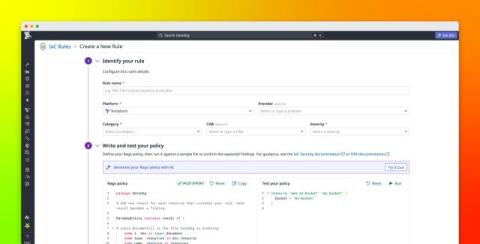
Enforce custom rules in Datadog IaC Security scanning

Infrastructure-as-code (IaC) security scanning can catch common misconfigurations before deployment, but every organization also has internal requirements that a default rule catalog cannot cover. For example, teams may need to enforce required tags, approved instance types, or naming conventions. With custom rules for Datadog IaC Security, security and platform teams can define these requirements as Rego policies and run them alongside Datadog’s default rules during IaC scans.

Cineworld Glitch Purportedly Allows Users To See Member Card Details

On 17 September 2026, users on X (formerly Twitter) posted that payment details belonging to other individuals had appeared on the Cineworld app under their personal accounts. On 17 September 2026, users on X (formerly Twitter) posted that payment details belonging to other individuals had appeared on the Cineworld app under their personal accounts.

CVE-2026-67401: SQL Injection in cPanel's EmailTrack Puts Shared Hosting Environments at Risk

A critical SQL injection vulnerability has been identified in cPanel & WHM’s EmailTrack functionality. The vulnerability was disclosed by cPanel on September 8, 2026, affecting every supported release line. It allows an authenticated cPanel account holder with mail related privileges to ultimately achieve root-level code execution on the underlying host.

What is SLH-DSA? Hash-Based Post-Quantum Digital Signature Guide

SLH-DSA is NIST’s standardised post-quantum digital signature algorithm (hash-based). It generates quantum-resistant signatures, ensuring signatures are not changeable and that they will not be forged, even when later superseded by schemes like RSA and ECDSA, which are susceptible to attacks by quantum computers. Organisations are studying it today because large-scale quantum computers could, in the future, crack the algorithms that currently underpin most digital trust.