Security | Threat Detection | Cyberattacks | DevSecOps | Compliance

The Latest Cybersecurity News & Insights From Around The World

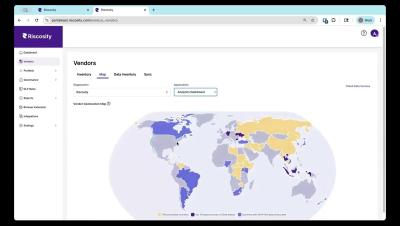


Riscosity + ServiceNow AI Control Tower
An introduction to Riscosity's integration with ServiceNow AI Control Tower.

How Managed Cybersecurity Services Reduce Risk and Enable Business Growth
Today's organizations of all sizes face increasing pressure to protect sensitive data, maintain compliance, and defend against sophisticated cyberattacks. At the same time, they must continue innovating, scaling, and delivering exceptional customer experiences. This dual mandate-security and growth-can feel at odds for many companies.

How Trusted Partners Reduce Enterprise Risk
Modern enterprises rely on complex ecosystems of cloud providers, software vendors, advisors, and managed service partners. These relationships drive efficiency and help companies move faster, yet they also create exposure. Every integration, shared workflow, or outsourced process introduces a possible weak point. Leaders who want to reduce enterprise risk need partner ecosystems that function as stabilizers rather than additional sources of uncertainty. The goal is to build a network of partners that strengthens resilience and supports long term stability instead of increasing operational fragility.
Vanta Introduces Agentic Trust Platform to Unify Compliance, Risk, and Security Assessments
Powered by the Vanta AI Agent 2.0, the Vanta Agentic Trust Platform helps every business earn and prove trust. Product innovations and demos live-streaming at VantaCon 2025 on November 19.
Lookalike Domain Attacks Explained
Your potential customers could be interacting with a malicious website that resembles your company's website. This dangerous cyber risk, known as a lookalike domain, is on the rise, with 80% of registered web domains in 2024 resembling 2000 global brands. This article explains what lookalike domains are, their impact on your brand, and why these attacks are increasing, providing real-time strategies to protect your business from domain spoofing.

Obrela joins the discussion on the future of NATO's cloud security
Drawing on Obrela’s experience managing complex cyber incidents and supporting national-level assurance programmes, Sebastian Bocquier, Head of DFIR, will present a practical, mission-ready framework that shifts accreditation from a static, one-time checkpoint to a continuous assurance capability embedded throughout NATO’s cloud ecosystem.
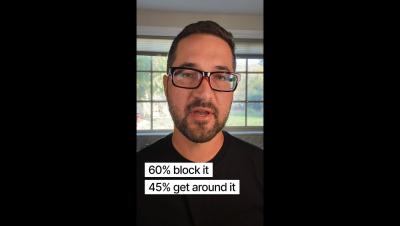
The Shadow AI Disconnect CISOs Need to Know
Our new State of Shadow AI Report has just uncovered a critical disconnect that all security leaders need to be aware of. We all know shadow AI is exploding, and that blocking is the most logical response. How else are you going to regain control? But our data shows this is backfiring: This is where blocking can get dangerous. It doesn't stop AI; it just limits your visibility. Download the full (ungated) shadow AI report to see all the data.

CVSS Is a Little Bit of Risk: Rethinking CVSS in Vulnerability Prioritization
The best part about my job is that I sometimes get to make some controversial statements. Well, as controversial as things can be in a niche area of cybersecurity like “what is a reasonable measure of vulnerability risk?” Along with my colleague Sander Vinberg we got to explore this question earlier this year at the second Annual VulnCon conference in Raleigh. Even though it’s only been held twice, it is quickly becoming one of my favorite conferences.