Ignyte Compliance Management Mapping Engine
Automate your security control mapping process by leveraging the Ignyte's mapping engine. This allows your organization to build a common controls framework.


In the age of digital warfare, successful businesses always stay connected with modern risk management techniques and also keep themselves abreast of a variety of risks that can affect their earning and business continuity.
A business wants to hire a vendor. However, this vendor does not meet policy standards and has requested an exception. The question you face is whether or not to approve or deny that exception request. What’s good for business sometimes comes with added risk. In fact, many incidents are the direct result of a policy violation. For risk management, and business needs, maybe the answer isn’t a simple yay or nay but a more nuanced approach.
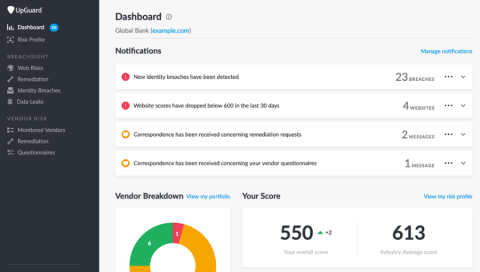
UpGuard CyberRisk enables organizations to control and monitor third-party vendor risk in real-time and improve their security posture. Since we launched CyberRisk, our team has been speaking to users and evolved the platform into two new modules, BreachSight and VendorRisk. Combined with a redesigned user experience, UpGuard is easier to use than ever.
With the constant barrage of headlines regarding breaches in the last few years, it seems that society in general has become numb to losing personal data. This year’s overarching cybersecurity theme is clear: We’re all in this together because we simply can’t do it alone. Effective defense demands a team effort where employees, enterprises, and end users alike recognize their shared role in reducing cybersecurity risks.
Your primary systems aren’t the only source of damaging exposed credentials. Third-party applications employed by your organization also have privileged logins that must be protected. Cloud platforms, software as a service (SaaS), and local third party applications such as ERP systems often have administrative logins with full control.
The definition of “operational risk” is variable but it generally covers the risk of loss resulting from inadequate or failed internal processes, people and systems or from external events. I, however, want to re-examine this general definition, so that the definition of operational risk takes into account all the cybersecurity-related risks that are currently plaguing organizations today. With the current definition, one cannot quantify internal processes and people.