Security | Threat Detection | Cyberattacks | DevSecOps | Compliance

SecurityScorecard Achieves FedRAMP 'Ready' Designation

SecurityScorecard is proud to announce that it has achieved the Ready Designation under the Federal Risk and Authorization Management Program (FedRAMP). This designation demonstrates SecurityScorecard’s commitment to the rigorous security standards required by the U.S. government for cloud service providers, and it will enable the company to meet growing demand from U.S. federal agencies for its Third-Party Cyber Risk Management Platform. U.S.
SecurityScorecard Research Investigates Chinese Threat Actor Group

In late August, Microsoft published its analysis of espionage activity tied to a new threat actor group called Flax Typhoon, which is believed to operate on behalf of the People’s Republic of China (PRC). The group mainly targets Taiwanese critical infrastructure, including: government, education, manufacturing, and information technology sectors.

Vendor Offboarding: Best Practices for Ensuring Security

When organizations hear “third-party risk management,” they often consider the processes needed to mitigate risks when working with a third-party vendor. These can include procurement risks and risks associated with starting new vendor relationships, often referred to as "onboarding,”—but what about when a working relationship ends?

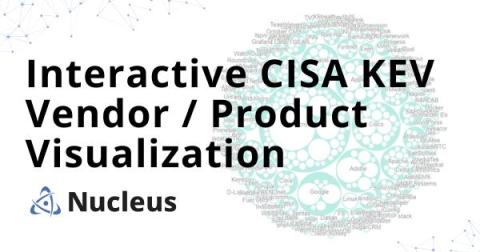
CISA KEV's Known Ransomware Attribution

This past week, Patrick Garrity, Security Researcher at Nucleus, spent a lot of time exploring Cybersecurity and Infrastructure Security Agency's update the Known Exploited Vulnerabilities catalog, which now includes attribution to vulnerabilities associated with ransomware campaigns. In this short video, he explores this new addition and walks through the data visualizations he created to provide broader visibility into this new addition.

A Deep Dive Into Security Testing

With the average cost of a data breach now at $4.35 million, it’s time for organizations to take proactive measures to protect themselves against cyber threats. By conducting thorough security testing, organizations can gain a deeper understanding of their security posture and make informed decisions about where to allocate their resources to improve their overall cybersecurity readiness.

Evolution of Cybersecurity: From Passwords to On-Demand CRQ

In merely a few decades, technological pioneers developed an unprecedented ability for society to access and store data in immeasurable quantities. This newfound power transformed many aspects of the physical world into a digital one, taking everyday activities such as banking, gaming, shopping, and socializing online.

Board Members' Guide to Cyber Governance and Leadership

Last week, I had the opportunity to moderate a panel at the NACD Summit, where I was joined by: Deven Sharma, Former President at S&P; John Katko, Former Member of U.S. House of Representatives; and Aaron Hughes, CISO at Albertsons. The National Association of Corporate Directors (NACD) holds its summit annually to empower directors and transform boards to be future ready. Our panel discussion focused on how board members can strategically oversee their organizations’ cybersecurity resilience.

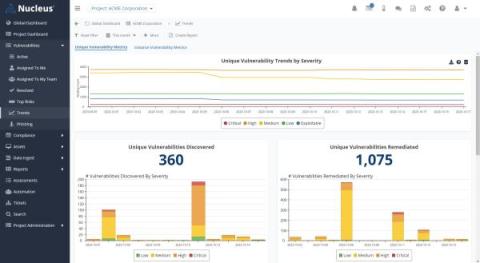
Release Spotlight: Trends Page Upgrade and Bulk Data Export Functionality

In vulnerability management (VM), the task of sifting through vast amounts of data to pinpoint critical insights can feel like searching for a needle in a haystack, specifically a haystack with many precious needles that all look alike. And, of course, the one needle you’re looking for is mission-critical and can mean the difference between securing your business and leaving it open to attack.

CISA KEV Ransomware Interactive Visualization

When we first built the CISA KEV enrichment dashboard at Nucleus, our goal was to gain new insights into the vulnerabilities that had been confirmed by CISA as being exploited. Recently, CISA expanded the Known Exploited Vulnerabilities Catalog with vulnerabilities “known to be used in ransomware campaigns”. We find this data valuable in helping organizations identify which vulnerabilities on the KEV pose greater risk.