Security | Threat Detection | Cyberattacks | DevSecOps | Compliance

The ROI of automated third-party risk management: A leadership perspective

As organizations become increasingly reliant on third-party vendors and external partners, leaders must ensure that risk management practices are both robust and efficient. Automated third-party risk management (TPRM) offers a transformative opportunity to drive measurable returns on investment (ROI) while enhancing operational resilience.

Risk register template guide

A risk register is a structured document used to identify, track, and manage risks throughout a project or within an organization’s operations. It serves as a central repository for all known risks, helping teams stay aware of potential issues that could impact objectives. Each entry typically includes a risk description, the likelihood and impact of the risk, the person responsible, and planned mitigation or treatment actions.

Hijacked by a Text: Understanding and Preventing SIM Swapping Attacks

SIM swapping is not a novel cyber threat; it has been a persistent issue for over a decade. This technique exploits vulnerabilities in mobile carrier procedures and identity verification protocols. Attackers employ social engineering tactics to deceive telecom providers into transferring a victim’s phone number to a SIM card under their control.

Navigating Cyber Risks Amid Heightened Middle East Tensions

Recent escalations involving the U.S. and Iran highlight an important reality: geopolitical tensions frequently extend into cyberspace. Cyber threat actors affiliated with or sympathetic to Iran are intensifying their efforts, increasing risks not only for U.S.-based organizations but also for companies across allied nations, particularly those with diplomatic, military, or critical infrastructure ties. Reflecting this elevated threat landscape, the U.S.

DIST Cyber Security Sectoral Analysis 2025 - A roadmap for navigating cybersecurity in the UK

The DIST Cyber Security Sectoral Analysis 2025 provides valuable insight and advice for navigating cybersecurity threats in the UK. It emphasises that the cybersecurity industry must innovate and adapt continually to address new and emerging technologies, along with wide range of complex cybersecurity threats. The latest sectoral analyses highlighted that cybersecurity is a booming and dynamic industry in the UK, and it thrives on innovation, regulatory evolution and strategic collaboration.

Navigating the Noise: Separating Security Reality from Hype

In the cybersecurity landscape, sensational headlines and alarming vulnerability disclosures are commonplace. Recent events have been a whirlwind, with claims of massive data breaches and widespread vulnerabilities affecting critical infrastructure. From the overstated impact of Next.js middleware vulnerabilities to the exaggerated reach of Nginx ingress issues, it's clear that the cybersecurity community needs a reality check.

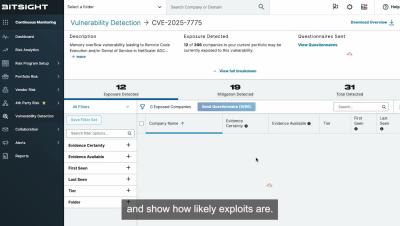
Exposure Management vs. Vulnerability Management: Key Differences and Why They Matter

Vulnerability management has hit a wall. Exposure management is how forward-looking teams break through it. According to Gartner, by 2026, organizations that adopt a continuous exposure management approach to guide security investments will be three times less likely to experience a breach. a more advanced and iterative approach to vulnerability management. Despite growing interest, confusion remains around what exposure management is and how it differs from vulnerability management.

The Future is Now with Intelligent DLP

Historically, software vendors that detect various types of data in customers’ environments have relied heavily on rudimentary methods for identifying that data. One of the most popular methods for identifying the presence of any particular type of data is using regular expressions and, admittedly, Riscosity started off doing the same several years ago.

What Is Human Risk Management?

Cybersecurity has long focused on fortifying networks, securing endpoints and blocking malicious code. Yet one of the most persistent and costly security vulnerabilities isn’t technical — it’s human. Employees routinely fall for phishing scams, mishandle sensitive data or unintentionally violate security policies. While most people don’t mean to cause harm, their behavior still introduces significant cyber risk to the organization.

From Chaos to Clarity: How to Modernize Vulnerability Management

Fragmented tools. Manual data wrangling. Burned-out teams. Sound familiar? In this expert roundtable with Trey Ford (CISO, Bugcrowd) and Jeff Gouge (CISO, Nucleus Security), we break down how today’s security leaders can transform vulnerability management from a chaotic, spreadsheet-driven burden into a unified, automated, and trusted function. Watch to learn.